
A daily news show, made for one listener.
I wanted an easier way to keep up
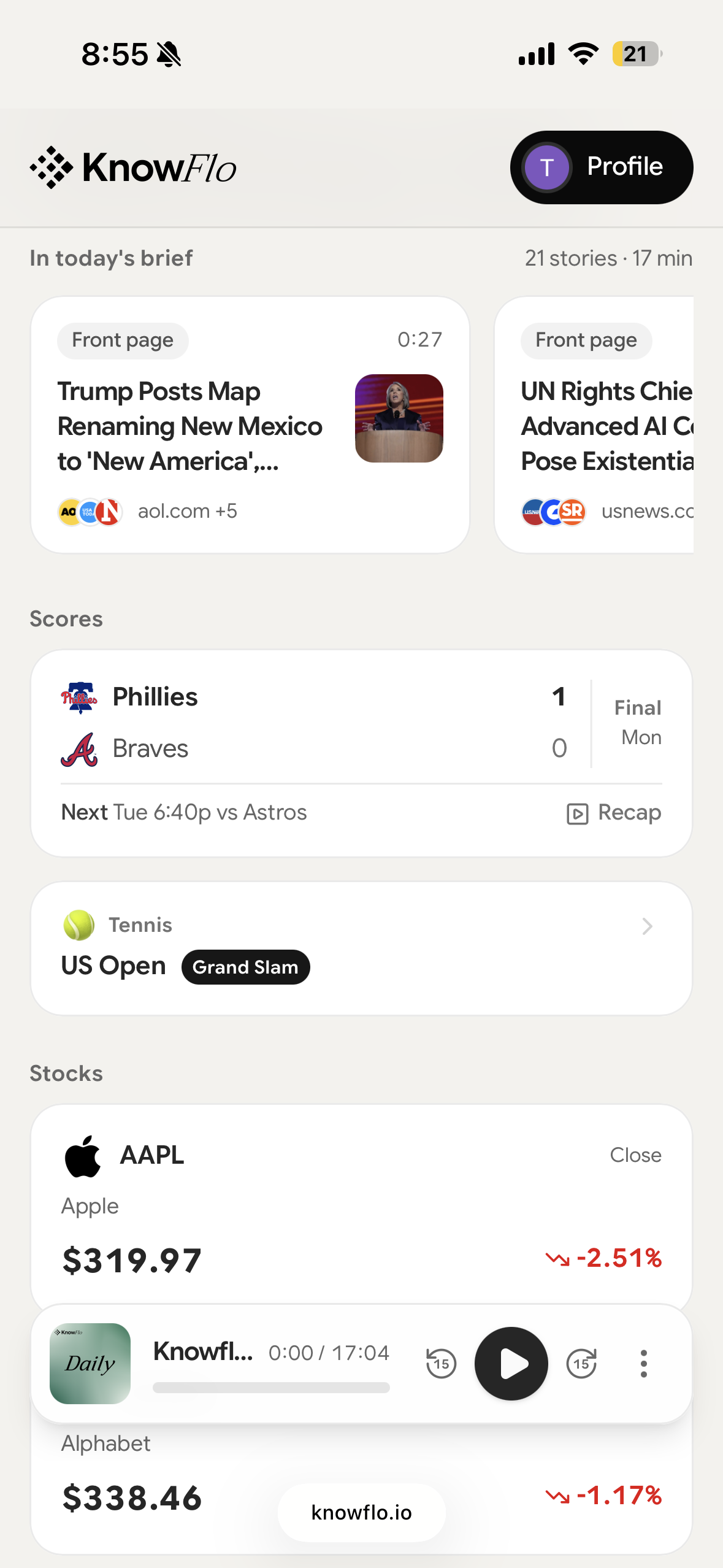
Reading has always been the slow way in for me. I started Knowflo to make keeping up with the news easier through audio. I designed and built both the listening experience and the system that selects stories, writes the show, produces audio, and delivers it to each listener.
Decide what deserves a listener’s time
Personalization starts before the script. Someone following a team, a company, and their industry needs more than a list of matching headlines. They also need the major news of the day, without hearing the same event several times from different outlets.
I built selection around those competing needs: match interests, weigh freshness and coverage, remove repeated stories, and assemble a briefing with room for both personal interests and broader news. The system distinguishes a quiet topic from a failed news source. A lack of updates should not become an excuse to fill the show.
Keep the reporting traceable
A convincing voice can make a weak claim sound authoritative. I built a separate verification pass that compares generated stories with their source articles and flags unsupported or contradictory claims. Checks on the podcast script also look for changed facts and missing attribution.
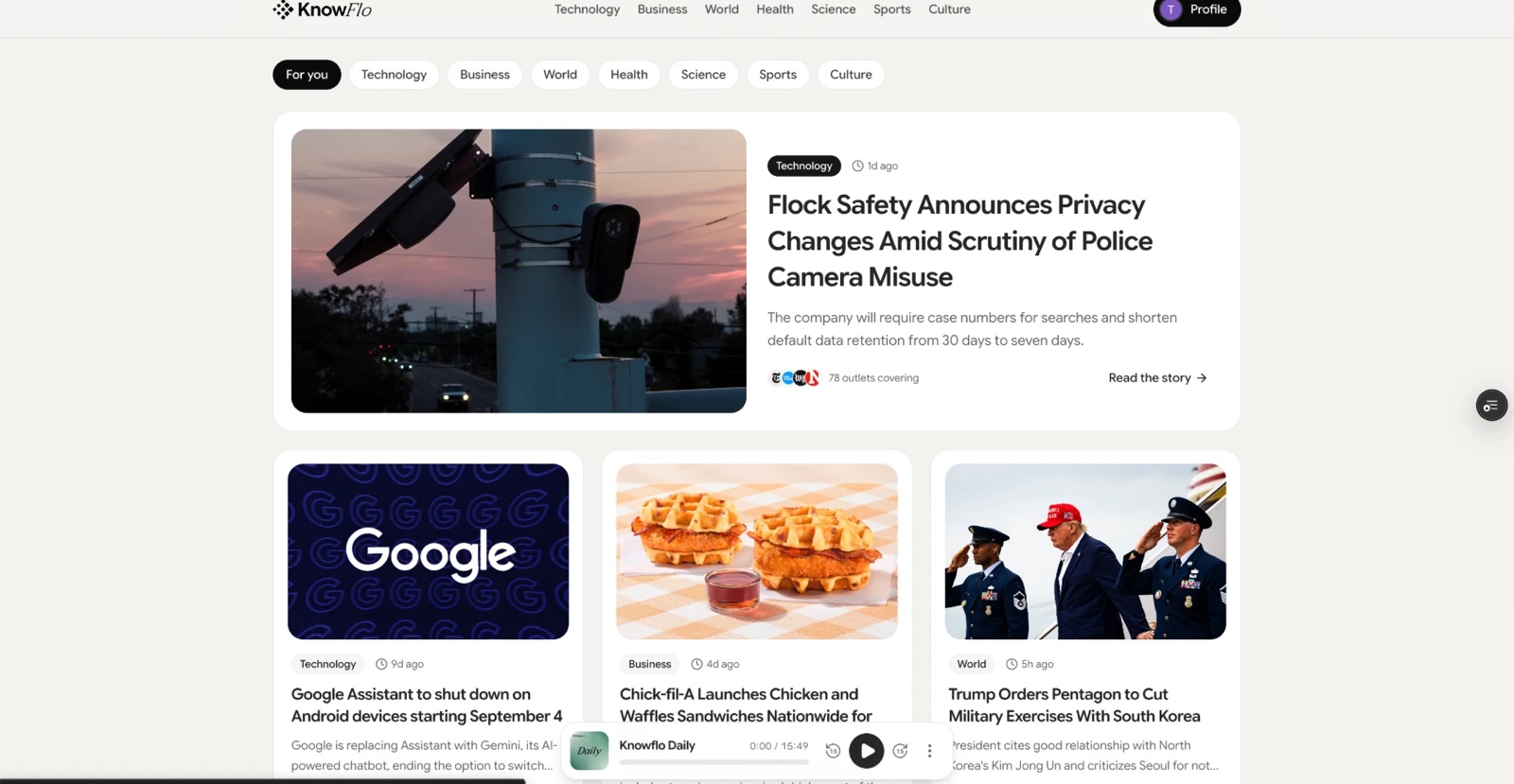
Verification is still supervised: story checks sample the news pool, and script checks record issues for review. The interface carries that same concern for traceability. Each story exposes its source coverage so a listener can follow the briefing back to the reporting.

Turn the script into something worth listening to
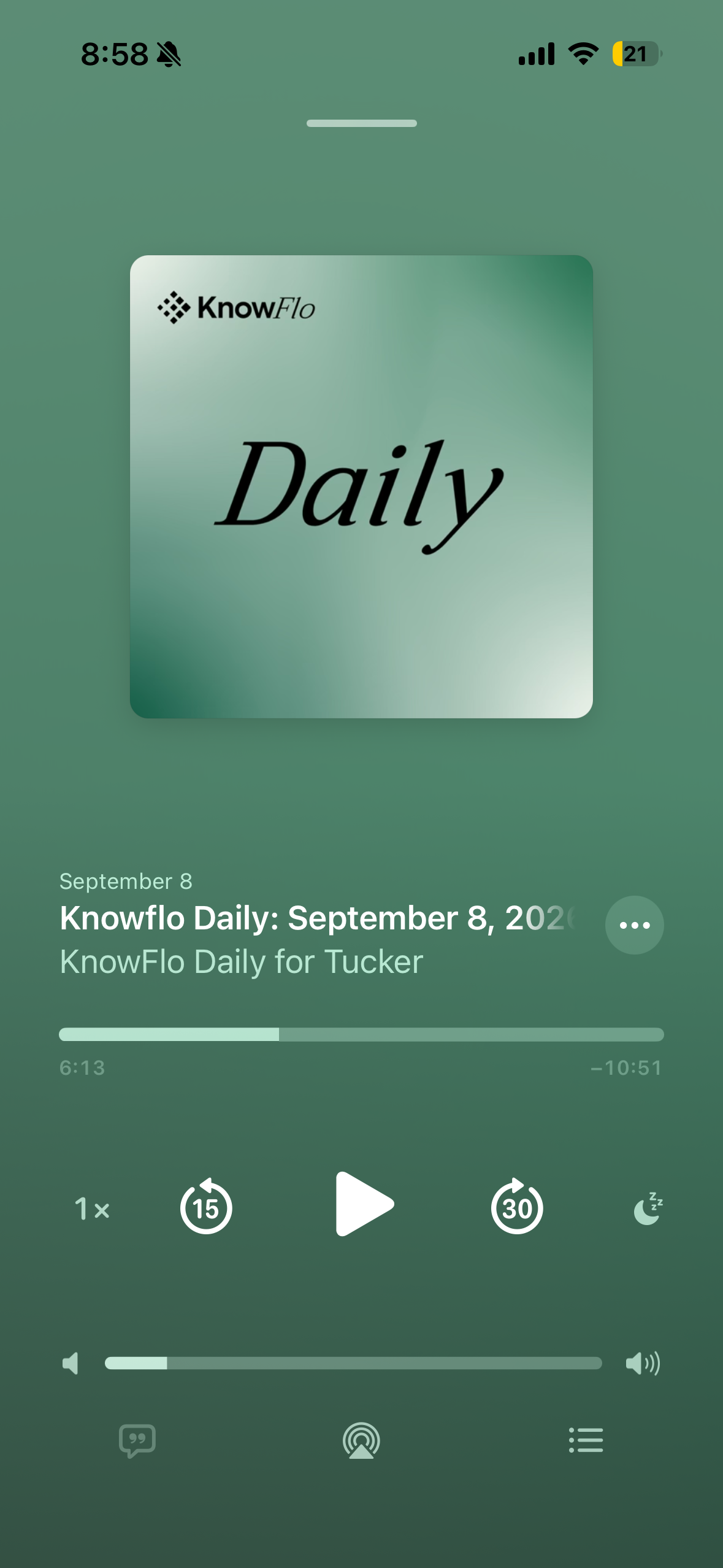
The writing and audio have different jobs. A separate editing pass rewrites the script for spoken delivery while the code retains its source links and story metadata. I compared speech providers on voice quality and cost, then built playback around chapters so listeners can move directly to a story.
I also separated script preparation from audio rendering. A briefing can be ready to read before the listener asks to hear it. That avoids generating audio for every prepared script, with a trade-off: the listener may wait for their episode to render.
Let the briefing fit an existing routine
Listener interviews challenged my assumption that the experience needed to happen on the website. People wanted relevant news, but they also wanted it to fit the routines they already had.
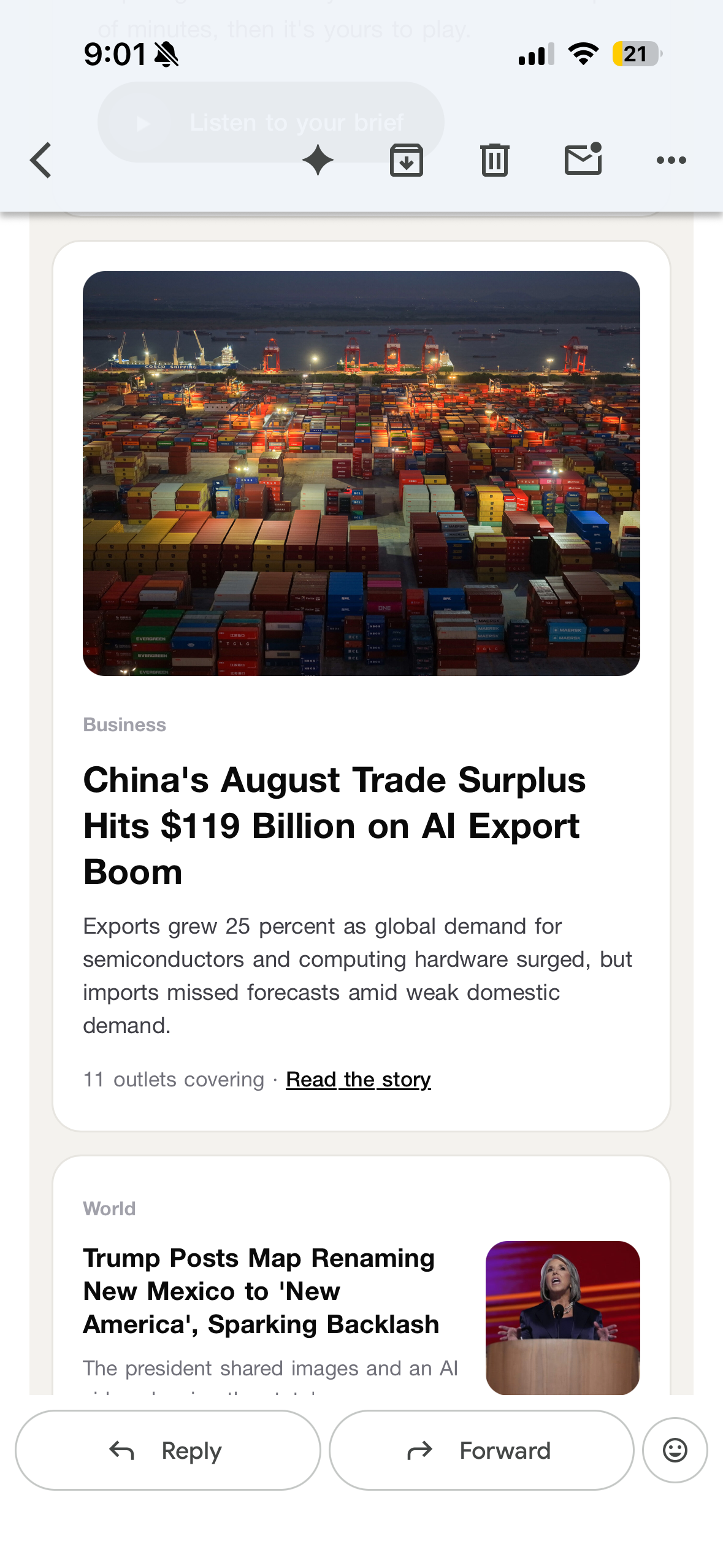
I expanded delivery to email and private RSS. That meant a briefing could arrive in someone’s inbox or appear alongside the podcasts they already followed. The website could remain useful without becoming another destination to check each morning.
The setup sheet gives each listener a private feed URL and explains how to add it to Apple Podcasts. Once they follow it, their briefing appears as an episode with its own story lineup.
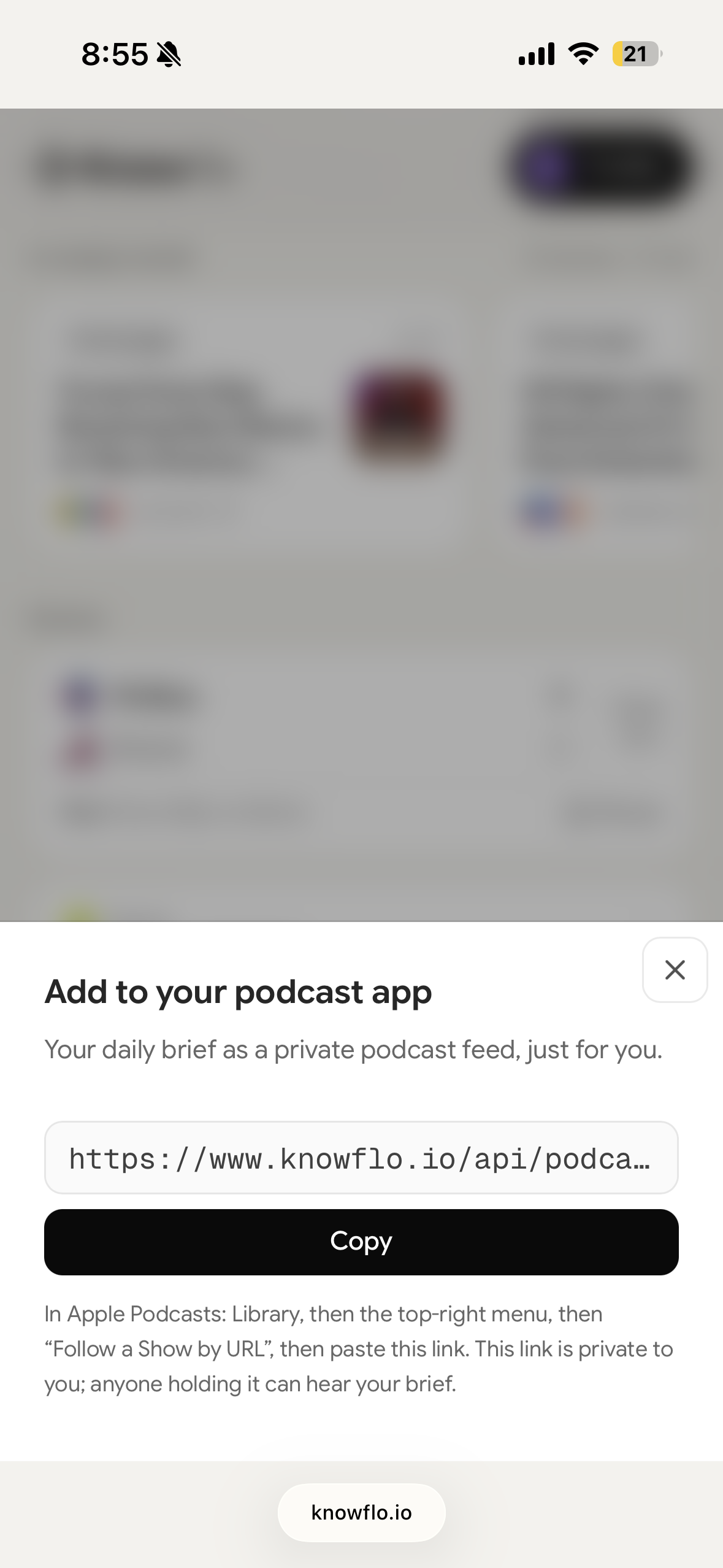
Copy the feed URL and follow it in Apple Podcasts.
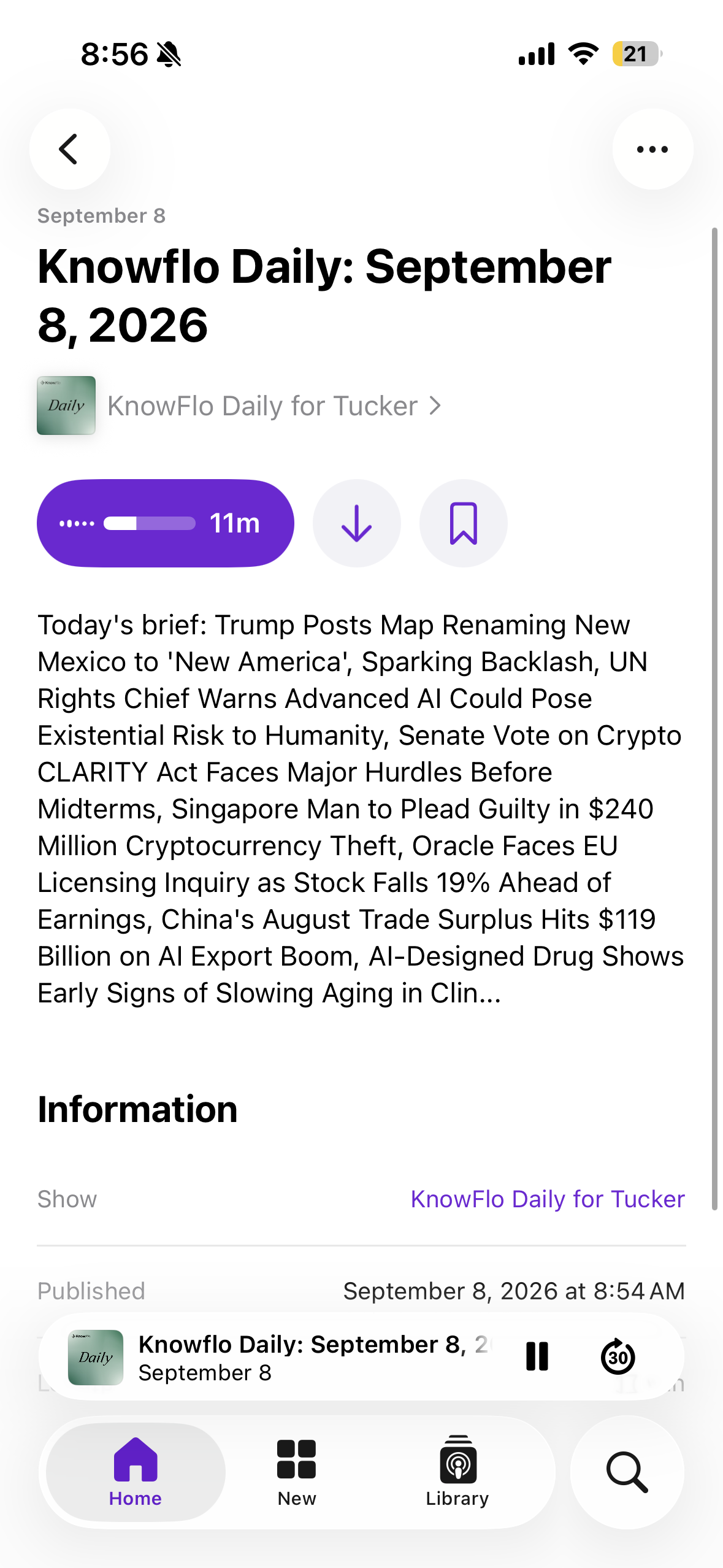
The briefing appears in the listener’s podcast library.
This introduces a setup step: copying a URL and switching apps. It also gives me less control over playback. The benefit is that ongoing listening can happen through familiar library, download, and playback controls.
Give each screen a reason to exist
Email carries the headline, summary, and source count into the inbox. A reader can scan the briefing there, then follow a story into the web experience to explore its coverage. The web player stays available as they browse.
A live product, still learning
Knowflo reached a beta of 148 users. More than 75 listener interviews have informed the work, from story relevance to the decision to deliver through email and private podcast feeds.
I’m continuing to evaluate what makes a briefing worth returning to: the stories it chooses, the quality of the listening experience, and whether it arrives where someone wants it. The delivery changes are live; their effect on retention is still an open question.
What I own
I led listener research, product design, engineering, and daily production. Beta listeners contributed their routines and feedback. Running the product means following a problem through all of those layers: an irrelevant story can start in selection, an awkward sentence in the script, and a missed listen in delivery.